Frequently Asked Questions
-
Why is the SHIPS Project doing an environmental initiative?
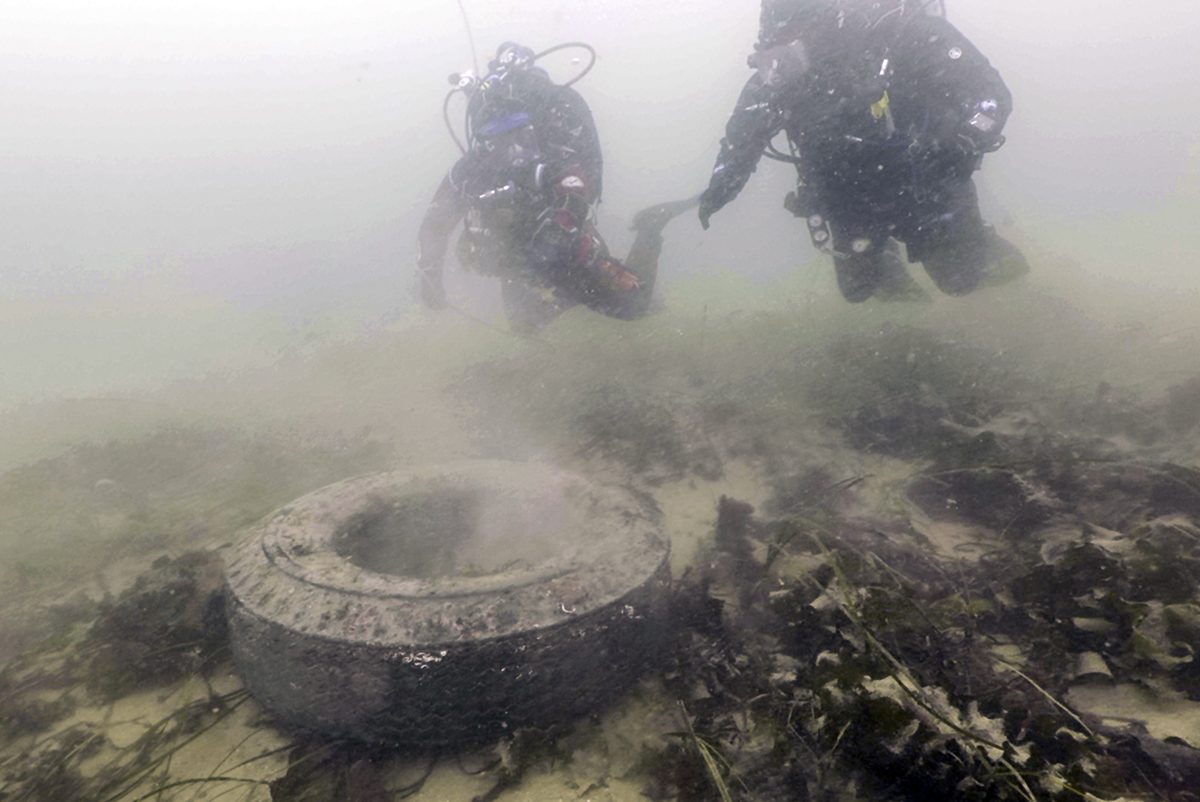
The SHIPS Project is a local history non-profit based in Plymouth, specialising in maritime heritage and environmental cleanup. We have launched the 1000 Tyres Project because we have found lots of tyres and other junk while searching for shipwrecks in Plymouth Sound.
-
What is this project all about?
The aim of the project is to help remove tyres and other pollutants from our marine environment and to provide education and awareness about the dumping of rubbish in the sea. We will start by removing more than 1000 tyres from the seabed in Plymouth Sound then have them recycled. More about the science behind this project can be found on the Science Pages
.
-
How did we find the tyres and other junk?
We found lots of tyres while doing sonar surveys in Plymouth Sound looking for shipwrecks, with the help of Sonardyne International Ltd.
-
What are we going to achieve?
- We will be helping to clean up Plymouth Sound!
- We will highlight the problem of discarded tyres and other junk dumped in the sea and on the foreshore.
- We will identify new and environmentally sustainable methods of recycling tyres and marine plastics.
- We will provide education and information to help reduce the amount of new dumping.
- We will involve the people of Plymouth in a great environmental project.
- We will engage the local sport diving community in an underwater project that benefits themselves, the marine environment and our underwater heritage. Sports divers will be used to confirm the identity of some of the objects located by our surveys, to recover tyres and other marine litter and to investigate any potential heritage sites.
- We will map all of the man-made objects on the seabed within Plymouth Sound and estuaries, such as tyres, shipwrecks, lost moorings, cables and discarded fishing gear. We will also map natural habitats such as seagrass beds and kelp beds.
- We will share the seabed map of Plymouth Sound that we create with other organisations and stakeholders.
-
Why are you recovering tyres when they are homes for crabs and lobsters?
Tyres are dumped rubbish that doesn't belong in the sea, and only now are we learning about the effects of the toxic chemicals and microplastics they produce. Yes they can be a home for lobsters, but chemical oil drums can be a home for wildlife on land, and we don't leave them in the environment for the same reasons.
-
Should tyres be brought up if sea life is growing on them?
Although some species grow on tyres, tyres are not very good for marine life and what does grow may contain higher levels of heavy metals like lead and zinc which has leached from the rubber. We avoid bringing up tyres that have protected species on them, such as pink sea fans. One of the research aims of the Project is to investigate replacing the tyres with a more suitable alternative home for marine life.
-
Are tyres good for building artificial reefs underwater?
Car tyres were once used as a cheap material for building artificial reefs underwater, such as Osborne Reef off Florida created in the 1970s. Over time, artificial reefs made of tyres become unstable, they leach out harmful chemicals and do not provide a hospitable environment for broad range of marine life. We do not use tyres to create artificial reefs anymore. We still need artificial reefs but companies like Arc Marine are creating better alternatives.
More stable and unreactive materials such as stone and concrete create more environmentally friendly reefs. Whole ships are also used to create artificial reefs having been cleaned of all pollutants they are scuttled on the seabed. Off Plymouth there have been three ships scuttled to be used for research and as artificial reefs, the steam yacht Glen Strathallan off the Shagstone in 1970, the small pilot cutter Tavy by the Breakwater in 1994 and the RN frigate Scylla in Whitsand bay in 2004.
Related papers and articles:
- France hits reverse on sinking tyres for artificial reefs - Phys.org
- Scuba Divers Left Picking Up Pieces After Tire Artificial Reef Projects Fail - SportDiver
- Fallout from Bad '70s Idea: Auto Tires in Ocean Reef - NPR
- Artificial Reefs that Fail to Benefit Anything - Endangered Species International
- Environmental impact assessment of a scrap tyre artificial reef, Collins K. J. et al, 2002
- Tyres: Unstable materials for artificial reef construction, Sherman R. & Spieler R, 2006
-
What makes tyres a pollutant?
Most tyres that end up in the sea are already old and well used. After a time underwater the tyres start to break down and produce microplastics and release harmful chemicals into the sea.
-
Where did the tyres come from?
There have been many tyres lost in Plymouth Sound over the years, some of the lost tyres were fenders that fell off ships while others were deliberately dumped in the sea and rivers..